ASK FATHER TIM - EP 11
What Is Prayer?

Prayer, of course, is meant to be a conversation, but not one where we do all the talking.
Prayer to God can take many different forms. It can be reciting prayers and reading them out of a book, reciting prayers from memory. The rosary which hopefully you're learning how to pray. The prayers of the mass, which is really a conversation and the priest guides the whole discussion.
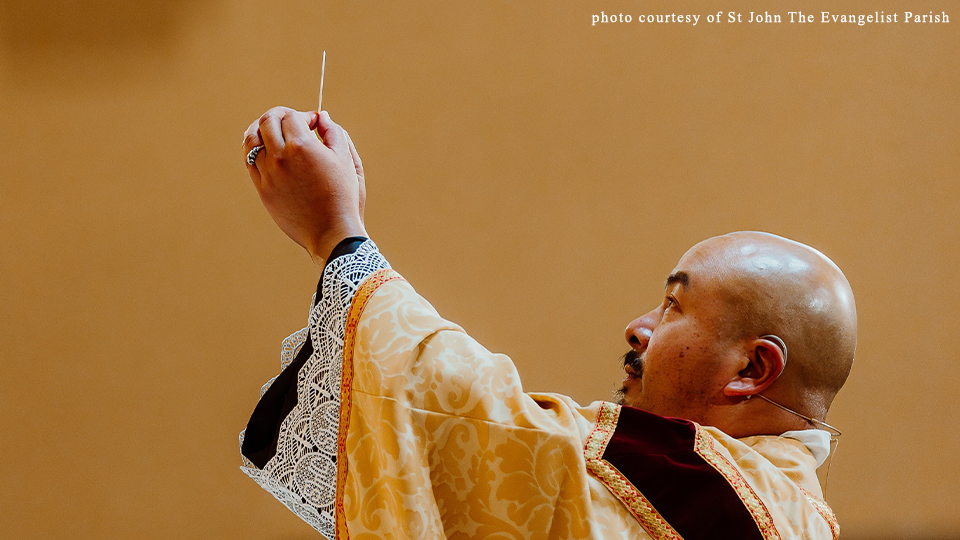
There are times when in prayer, the priest is speaking directly to God on behalf of the people. There's times when the priest is speaking to the people on behalf of God. And then if you notice during the prayers at the altar, before bread and wine become the body and blood of Christ. There is that point called the consecration, when instead of talking about Jesus and the third person, the priest starts acting in the person of Christ and saying the words of consecration as if it was Jesus himself at that altar, consecrating that bread and wine to make it his body and blood.
There are many times when people pray that they say, I'm not sure anybody is listening because the scriptures tell me, ask and you will receive, seek, and you will find. Knock and the door will be open to you. And yet many times what we're asking for, we don't get what we're seeking, we can't find. And we're knocking at a door that doesn't seem to be open to us.
But I think perhaps there's a few things for our reflection. First and foremost, how long did we ask for? Did we say that prayer once or twice? Were we willing to commit to that prayer for 20 years or more? If needs be, we have to remind ourselves sometimes what Saint Peter said in his second letter in the New Testament, chapter three, verse eight, the For God a day is like a thousand years, and a thousand years is like a day.
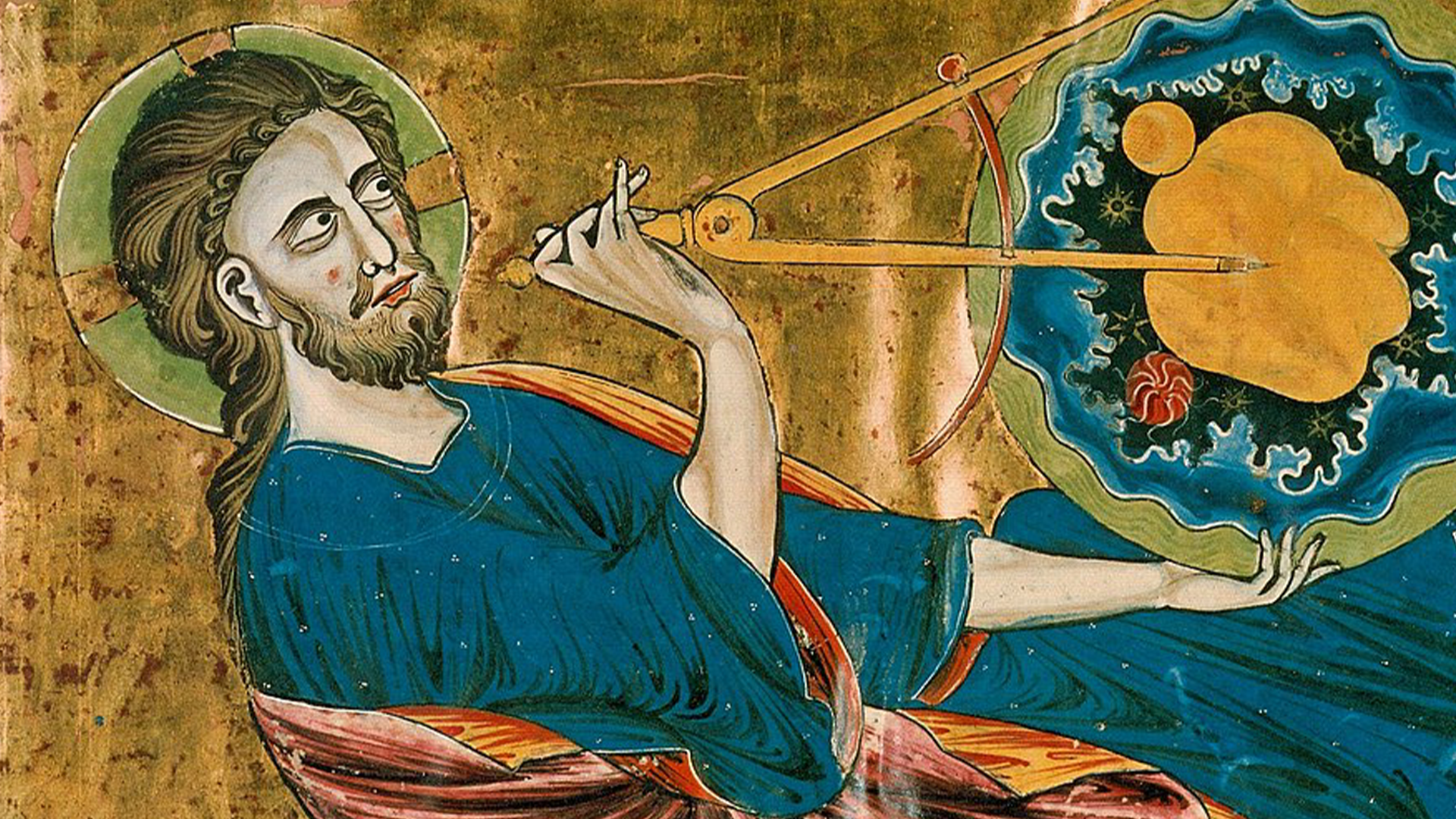
Something that happened a year ago might feel to us like it was a decade ago. But for God, who exists outside the confines of space and time, something like the resurrection of His Son was the blink of an eye ago. That's in the neighborhood of God, who is the creator of the universe, who, Psalm 33 tells us, breathes stars out of his mouth.
Of course, when we pray, maybe we're too specific about what we would consider to be an answer to our prayer. If somebody is sick and we pray that they get well and they don't get better, then we think that our prayer wasn't heard or that God didn't love us, or that God didn't love them, or we said something wrong, or we committed some sort of sin that blocked that prayer from being answered.
What we really need to pray for is that the person who is sick has the strength to be able to carry that cross
and that we have the grace that we need from God in prayer to be able to help them, to bear that cross and to accept the outcome, whatever that outcome might be. We remind ourselves that Jesus only ever taught us one prayer, and that prayer was rather simple the Lord's Prayer.
As we recited in the Catholic Mass, we recited from Matthew's account from the sermon on the Mount, and Jesus lays out the whole program before we ask God for anything. In the Lord's Prayer, Jesus told us to praise God because he is God and to recognize that He is God and we are not, but also hidden in there is something critically important.
When Jesus taught us to pray that I will be done, thy will means not mine. Prayer them becomes an act of render surrender to a sovereign, Almighty God who owes us nothing, including answers and explanations. But when we look at a crucifix or we see the Eucharist, when we look at our own body, we realize that he who owes us nothing has given us everything, everything that we need in order to get through this life, to find heaven one day.
Prayer then, needs to be more than the Hail Mary pass. We use that as a sports analogy. When the buzzer is about to go, and they try to make the ball go all the way across the court or the field to get through the net or through the end zone so that they can move from a loss to a victory. That's not really faith.
Our faith is praying to God without ceasing.
That's what the Scripture tells us to pray in good times and a bad. Not to have a fair weather faith that only prays when things are going great and then runs away at the first sign of trouble, but also not to have that crisis in driven prayer, where we will only approach God when everything else has failed to bring us what we need or what we're looking for.
It has been said in ancient times that all roads lead to Rome. The Roman Empire had a fast network of roads. Sadly, it was built by slaves and paid for by the taxes from places like Israel and Judah. But it was the case that you could get to Rome from just about anywhere in the world. I think that's the same way in the Roman Catholic Church when it comes to prayer and spirituality, that as long as it is a Christian prayer for the Triune God, we can certainly approach our merciful Savior in any way we wish.
We see in the scriptures. There was Mary, the sister of Martha and Lazarus of Bethany. Her prayer was just to sit at the feet of Jesus. She was in the holy presence. That is something that many people do in churches still to this day, sitting quietly before Tabernacles, and is something that also happens during perpetual Eucharistic adoration that happens right here at our Queen of the Miraculous Metal Church in Jackson, where 24 hours a day, seven days a week, people are in the holy presence of Jesus in the Eucharist.
Some of them are praying the Rosary. Some of them are reading the Bible. Some of them have brought other books and prayers and devotions with them, and others are simply watching on as the mystery of our salvation unfolds before us.
One of the greatest definitions of prayer I ever heard comes from a story involving Saint John Vianney, who was a great confessor and parish priest in France in the middle of the 1800s. He was pastor of Saint Sixtus, the Fifth parish, and ours, France, just south of the big French city of Lyon, and it's a very small parish. It was a farming community, and one of the wives and mothers in the parish began to complain to Saint John Vianney about her husband, who she felt was spending too much time in the church, instead out of in the field doing his chores.
This woman thought that her husband was going into the church to waste time, or to hide from her, to hide from his work. And so Saint John Vianney, before confronting the man, decided to observe him closely and at great length. And finally he went up to this peasant farmer and asked him, what happens when you pray? And the farmer simply replied with reference to the tabernacle,
I look at Him and he looks at me.
What a great definition of prayer, simply to recognize that there is a God, and that he has revealed himself to us through His Son Jesus Christ, and invited us to know him and to be in a loving relationship with him. The prayer then, can take on many different forms.
It doesn't have to be a long prayer to be a holy and humble prayer and a fervent prayer. But prayer above all things is placing our trust in God that if he brings us to it, he will bring us through it. It becomes for us an anchor on the stormy seas of life that promises one day to bring us to the safe harbor of heaven.
ALL ROADS CATHOLIC MEDIA
Share &
Evangelize
If you find this valuable, share it as a way of living out the Christian Mission to proclaim the Gospel to all of creation.