ASK FATHER TIM - EP 10
What Is Faith?

What is faith? What a loaded question from a young person.
Of course, we could go to the biblical standard definition that comes to us in the New Testament, from the letter to the Hebrews, chapter 11, verse one that says, "faith is the realization of things hoped for and the knowledge of things unseen." That last part is perhaps most important for our reflection on this question. What is faith? The knowledge of things unseen?
Obviously, God before Jesus Christ was invisible. His existence was only revealed by himself in various ways. First, through creation, everything had to come from somewhere. And we believe by faith that God created everything out of nothing. But then, in the course of revelation, which comes from the Latin revelry to remove the veil, to pull back the curtain, God revealed Himself in His word.
And we call that the Old Testament and the New Testament, the Bible. He revealed himself through his prophets, judges, patriarchs, the focal characters of the Old Testament. He reveals himself in his law, in his covenants. And then, of course, through His Son Jesus Christ and all those prophets, the Old Testament were, in one way or another, preparing people for the coming of Jesus Christ.
There are many people in the world that do believe in God, that believe that Jesus is God's Son, but there's plenty of people that do not.
And so belief is at the center of the question about faith. But faith is not only a religious issue.
We believe a lot of things by faith without having to prove it for ourselves.
And example, children in school, young adults in university. The teacher teaches them something, and they either believe what the teacher said is true, or they decide to go behind the teacher's back and fact check them and see if it is true. We can demonstrate certain things that can be proven. We could put two cups here and two cups here and see that we have four cups.
We could prove that two plus two equals four. You don't have to believe it. You can figure it out for yourself. But in matters of faith, we usually believe based on whether or not we respect the authority and the credibility of the source.
The teacher for the student, the Bible for the scholar. The church for those who consider themselves members of it. The Bible is a book of faith, not of science. And as such, we as Catholics believe that the Bible is free from error with regard to faith and morals. But there are many people that want to go through it, page by page, first by verse, and try to find contradictions where it goes against itself in different books, sometimes even in the same book.
That wouldn't be reading the Bible from faith. That would be reading the Bible from skepticism.
And if we're looking to find fault with something, surely we always will. Credibility of the source. The church has given us the Magisterium, which comes from the Latin magister, which means teacher. The church has handed on to us faithfully through three millennia. These 20 centuries of Christian thoughts and Catholic theology and biblical scholarship.
And we then must choose to make the act of faith. Making a conscious choice to believe what the Bible says and what the church teaches about it, based on the credibility of the source. And the Bible has been proven time and again to be very credible. And the Magisterium does the Scripture scholarship, putting together the fathers of the church with the thoughts of Scripture scholars throughout the centuries to make sure that we get the best Scripture scholarship available to us.
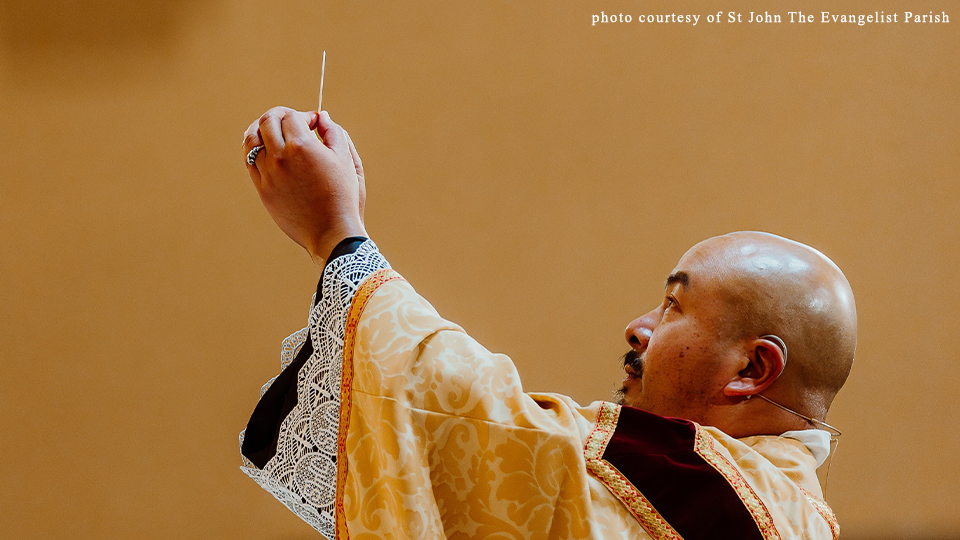
And then we have to make that choice, that act of faith. Do I choose to believe it or do I not? And that applies to many things in the church, including the Eucharist. There are many people that do believe that in the mass, bread and wine become the real presence of Jesus Christ, his body, blood, soul, and divinity.
But there are many people that do not. I've been experiencing this recently, as I've been going through confirmation interviews with incoming freshmen preparing to be confirmed by Bishop Bowyer this fall at Michigan Center, and ask them what the church teaches about the Eucharist. And most of them can tell me bread and wine become the body and blood of Jesus.
But then I ask them if they believe that...
whether they believe when they go to communion, they're receiving Jesus, or do they believe they're receiving a symbol? And sadly, right now, I would say it's about 70, 30 or a third of those that I'm sitting with and having this conversation with have chosen not to make that act of faith, to believe in the Eucharist. I asked those same people, or do you believe that God created everything out of nothing? Yes I do. Were you there to witness it? No. No one was. And it is interesting to note that we believe things about the past that we weren't there to witness. And no one was like the resurrection of Jesus. Not a single person was there when the stone was rolled away.
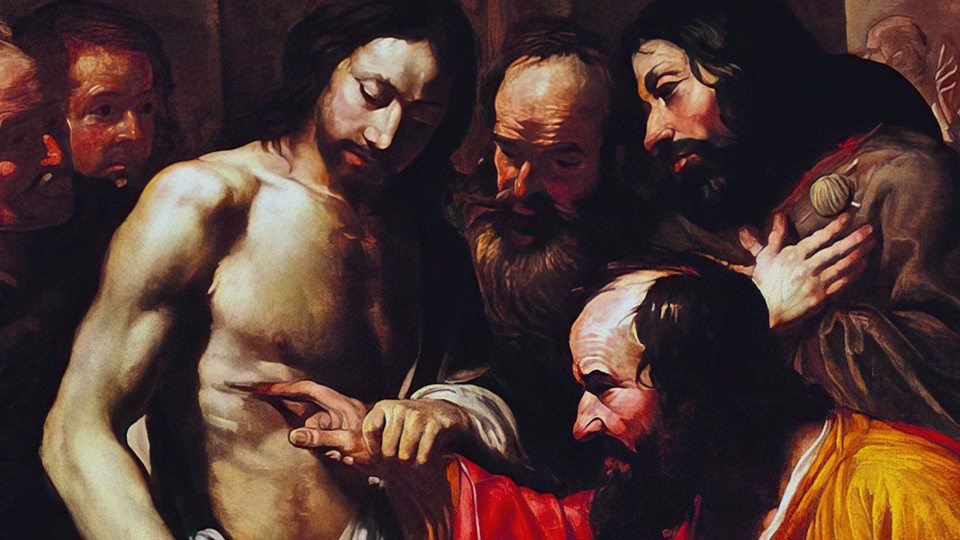
That is why the tomb, emptied of its contents, became the faith based fact of the resurrection. Rather than watching Jesus walking out of that tomb because no one was there to see it. It's like the age old question when a tree falls in the woods. Does it make a sound? And so, my friend, my young friend, we have to make the act of faith based on the credibility of Scripture and the authority of the church.
There was a mathematician and philosopher in France centuries ago named Blaise Pascal. And even though I was very bad at math and not much better in philosophy, I do remember what they call Pascal's wager. He said, live as if God exists, and he does. You gain everything. Live as if God doesn't exist. And he does. And you lose everything.
Perhaps in the end, it's really just that simple. I hope you and everybody listening out there will join me in making an act of faith each and every day, because God loves us so much that he's given us everything that we need in our toolbox, in order to know him and to love him and to serve him in this life, and hopefully one day and forever to be joined with Him in his kingdom at the throne of the lamb.
ALL ROADS CATHOLIC MEDIA
Share &
Evangelize
If you find this valuable, share it as a way of living out the Christian Mission to proclaim the Gospel to all of creation.