MISSION
A New Apologetics
An Intelligent, Enthusiastic Defense of the Faith.
Over the past several generations the Church, and religion broadly speaking, has experienced a sharp decline. This coincides with an increased hostility from secular atheists who are winning over more young minds through rational argumentation. We as Catholics need to rediscover our rich and over two thousand year old intellectual tradition.

"Be prepared to give reason for the hope that is within you. But do this with gentleness and respect."
Peter 3:15
In the decades following Vatican II (1962-1965) the Church largely avoided the use of apologetics (from the Greek term apologea meaning "a reasoned statement or argument"), viewing it as too aggressive or condescending. No sensible Catholic should endorse proselytizing, but an intelligent and respectful defense of the Faith is something qualitatively different.
As hoards of young people leave the Church and disaffiliate from religion altogether, the most significant reasons they give as to why are often intellectual ones. They didn't get their questions answered and they don't believe the teachings. Crisis of catechetical training in the generations following the council did not serve these matters, as we wandered away from our sacramental and mystagogical tradition.
The oldest intellectual tradition
in the West.
This leads us to where we are today - a Mystical Body that is poorly educated in the deep, spiritual and metaphysical truths of Christianity. Poor spiritual training and the abandonment of an intelligent and nuanced apologetics has left countless followers over the generations demoralized and defenseless in the face of an ever growing secular, increasingly hostile atheistic critique.
As members of the oldest intellectual tradition in the west we should better understand common reasons for disaffiliation and some of the most persuasive arguments against religion. The explosion of discourse brought by the digital revolution offers a tremendous opportunity to articulate our rich understanding of God, Jesus Christ and the Catholic Tradition. Not to simply win rhetorical arguments, but to win lost souls back into the Kingdom of Heaven.
A Renewed Apologetics
As we revitalize our catechesis and renew our understanding and implementation of a Catholic apologetics, we ought to equip ourselves with some of the core questions, issues and misunderstandings facing younger people today.
Frequently Asked Questions &
Arguments against God
Watch More Here
Learn more here.
Scientific or empirical evidence reveals powerful truths about the material, contingent world and its interactions. Science harnesses the innately human impulse to know truth whereby we utilize technology and process to reveal patterns of intelligibility woven into creation.
In the example of a painting - science can tell us about the canvas and paint being used, but it would fundamentally be unable to offer anything about the artist.
Christians believe in an immaterial God, who is beyond time, space and the material world. Is there scientific evidence for immaterial things like love, care, intention or forgiveness? No. But as humans, we know these things exist and are able to discern the signs pointing the way to these transcendent, immaterial qualities.
Watch More Here
If these stories are read through a materialistic, reductionist framework they will not yield the deep, metaphysical, psychological and spiritual truths on offer. If your purpose is to understand these ancient texts, you must breakout of the overly rational, reductionist worldview brought on by the enlightenment.
A more tropological reading of the story of Jonah for example, would illustrate the reality of conscience as a pathway to God. John Henry Newman said the voice of conscience is "the aboriginal Vicar of Christ". What happens when we don't listen and follow the voice of conscience? That is, the voice that tells us what we ought to do. Disaster will inevitably strike, affecting not only us but those around us.
Watch More Here
Bible literacy is a major issue even amongst believers. Extracting a single book, verse or line from any piece of literature, and honing in on it to derive the meaning and purpose of the entire corpus, is going to be misleading. An ancient text written in a foreign language, carrying within it relics from cultures and societies of time gone by, will present interpretative hurdles.
As Catholics, we believe the Bible should be read as a whole; giving proper context to each genre therein. In no better place will you find this opportunity than at the Mass. It should also be read Christologically, that is, through the life, teachings, miracles, death and resurrection of Jesus. Only then can the grand narrative arch of the Great Story be fully revealed.
Watch More Here
But when you're talking about objective truth and an objective God, it follows that you will find yourself in greater or lesser proximity to that objective source.
We believe that Catholicism has received and participates in the relationship to God in the fullest way possible. Through the Church, the liturgy, the Sacraments and in right worship and sacrifice to what is most high.
Watch More Here
A Sacramental worldview and the three transcendental qualities of the good, the true, and the beautiful are helpful pathways to relating personally with the one true God.
These qualities are not entirely native to the material world, but they do make themselves known to us through their physical manifestations. Like God revealing himself to Moses in the burning bush, we are offered a glimpse at what is beyond, through the physical world.
Watch More Here
As Catholics, we believe that Truth exists and does reveal itself to us. We believe that we are made and blessed to come into a relationship of knowing with truth. The patterns of intelligibility through the created world helps to shed light on the goodness and order and truth behind creation.
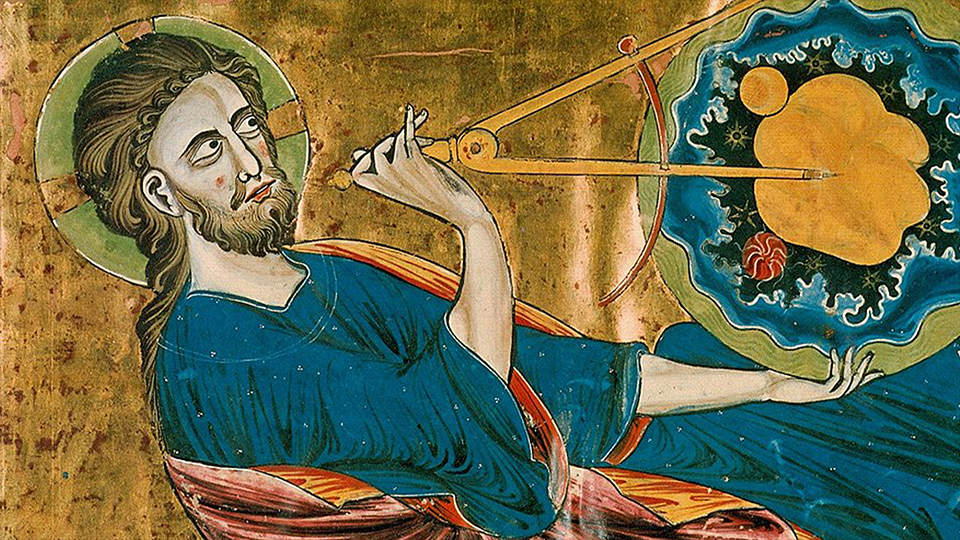
The Christian God calls us and speaks to us. And did so in a profound way as author of The Great Story.
Watch More Here
Catholics believe that the Church is our Mother. Drawing all of us together in her warm embrace for nourishment and rebirth via the Sacraments. All as adopted sons and daughters of God. The Church represents a meeting of heaven and earth in a cosmically significant way.
When someone is speaking ill or treating your mother poorly, do you abandon her? In times of hardship is when the Church needs us most.
Watch More Here
Worship involves intention, attention, organization, celebration, reverence, and the living out of faith in an experiential form of knowing.
When we worship, we see and know and marvel at, fall in love with, are nourished by, celebrate, honor and thank that which is most high, which we call God.
Not because God needs our worship. Worship is for us and is part of being human. Right worship leads to human flourishing.
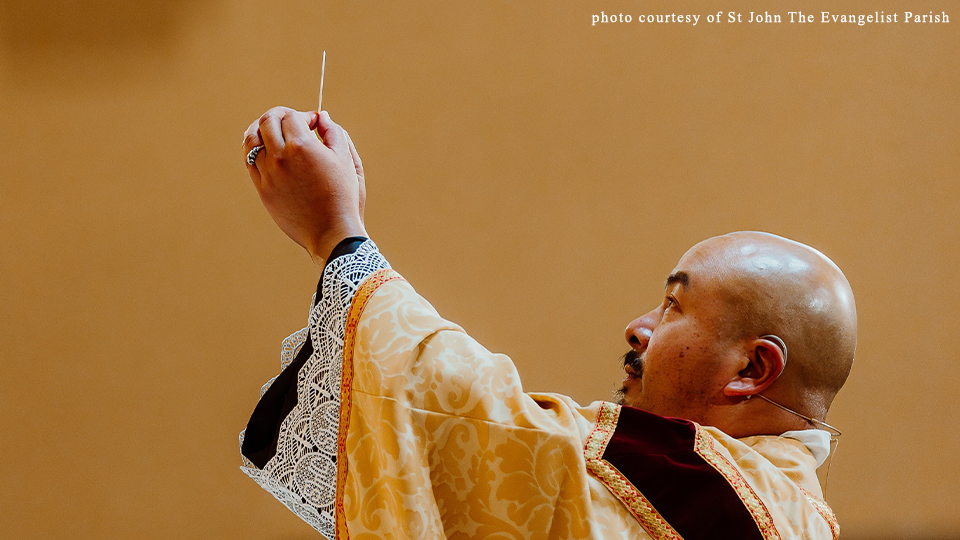
When the Mass is understood properly as the re-presentation of Christs sacrificial act and the privileged encounter we have with Him through His Real Presence in the Eucharist; the Mass should find its rightful place, at the center of our life.
Watch More Here
ALL ROADS CATHOLIC MEDIA
All of us together are His Mystical Body.
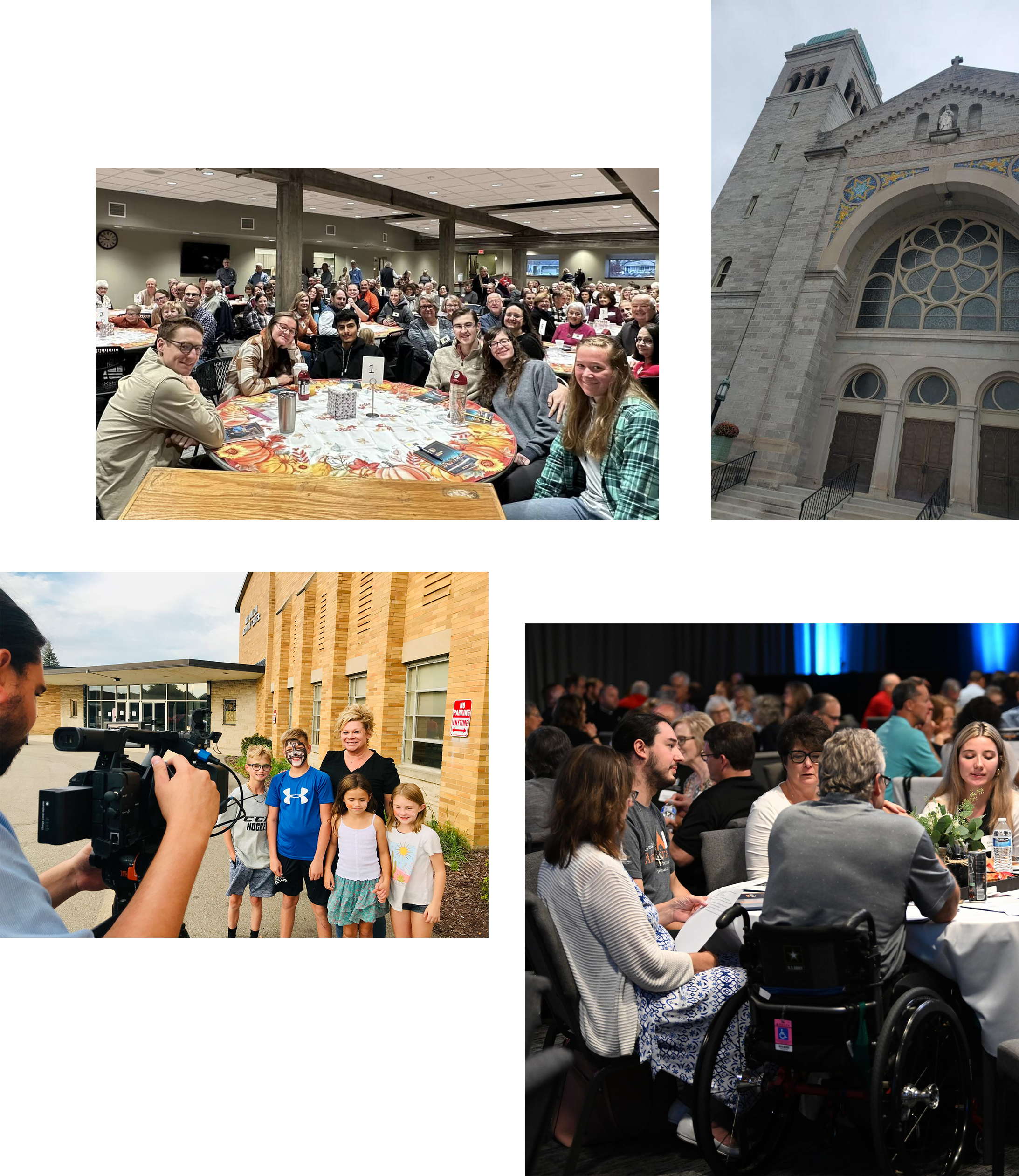
All Roads Catholic Media highlights Jackson Catholic Parish events, Holy Sacraments, and personal witness from parishioners. Our mission is to help the younger generations feel comfortable participating in parish life, to understand and live out their faith more boldly, and to evangelize more effectively in their everyday lives.