ASK FATHER TIM - EP 9
How Should a Catholic Understand Aliens?

What an interesting question. Of course, this issue is very much in the news because starting on May the 8th of this year, the federal government released many files related to us, as we hear in the question. Unidentified Anonymous Phenomena.
We call them UFOs and identified flying objects. This has many people, of course, wondering about area 51 and Roswell, and revisiting some of the great horror movies of our youth and science fiction fans, one and all.
And yes, it's an excellent question. Are we the only ones out there? And yet, the Catholic Church has not spoken definitively one way or the other. And this isn't the only time the Catholic Church has chosen not to weigh in with a definitive statement about an issue. Think about evolution. Evolution is something that the Catholic Church has not really commented on, other than to say that God is the creator.
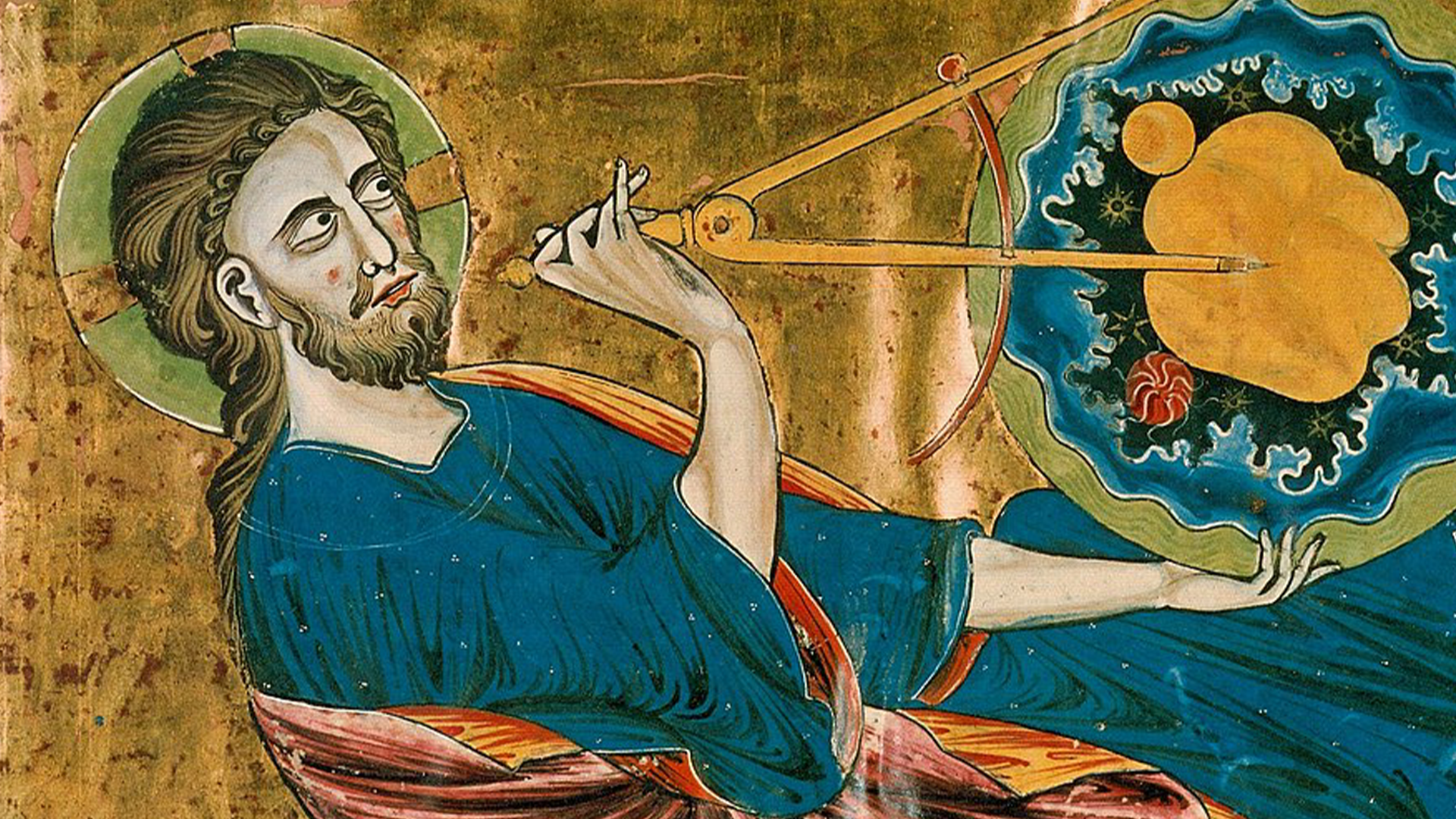
Whether it happened in the six days that we see laid out in the book of Genesis, where some sort of big bang that brought order from chaos using primordial ooze. It is always God who presses the button that makes that big bang. The church has left that somewhat of an open question, but I think before we address in particular what the Catholic Church might think about these unidentified anomalous phenomena or unidentified flying objects, we have to look at the fact that the church very much believes in the study of the cosmos and the advance of sciences.
There is an observatory at Costello, Gandolfo, where the Holy Father spends his vacations. There is a papal observatory in the mountains of Arizona run by the Jesuits right here in the United States. Yes, we recall that the Catholic Church and Galileo had their disputes, but the Catholic Church was engaged in those disputes in the Middle Ages because the Catholic Church was engaged in the advancement of the sciences.
Some of the oldest libraries and universities in Europe and on planet Earth are Catholic in their origin.
Monasteries where the great centers of learning in Europe for a thousand years when most people could not read it, was the Catholic Church that was promoting education, promoting the study of math and science as a means by which we might come to better understand and to explain not only the created world that we live in, but also the universe in which this world exists.
Yet our solar system, the galaxy, the Milky Way, call it what you will. I remember as a child growing up, my parents forced us and I do mean forced us to watch PBS. And there was Carl Sagan in his series The Cosmos, where he would talk about the immensity of the universe and billions and billions of stars. He always said, I didn't perceive that Carl Sagan was a believer, and he never gave God the credit for this creation, but he certainly captured very well the immensity of what is out there and the almost total lack of knowledge we have about worlds beyond our own.
That being said, just to concretize this idea, that the Catholic Church supports faith and science, we have John Paul II and Pope Saint John Paul the Great, who in the middle of the 1990s published an encyclical called fetus et Ratzinger Faith and reason. In the most beautiful phrase in the document, our late Holy Father, now a saint, said that
Faith and reason are like the two wings of a dove, that a bird would not be able to fly with just one.
And so he said, man does not live by faith alone. Man does not live by reason alone, but rather faith and reason. Flourishing together causes that bird to fly. It is with that openness and the desire to know the created world and what lies beyond it, that has allowed the Catholic Church to continue to pursue advances in faith in science and this dialog about worlds beyond our own, with an openness, but without commenting on things we may not yet fully understand.
As we look at divine revelation, we believe that we only know about God. The things with God chooses to reveal to us. And as such, the Catholic Church has yet to believe that there is credible evidence that there are beings in other worlds that live a life like ours that might be coming to visit us some time soon, whether it be the little Green Martian or the fine desk darting across the sky.
But even though we have no evidence that these things do exist. We also don't have proof that they do not. And I think that's why the Catholic Church maintains its openness. There is a wonderful study that was published in EWTN, which has joined forces with the Catholic News Agency, and it spoke with various scholars about the possibilities of whether or not the Catholic Church does believe in extraterrestrial life.
And this led to the making of a 2024 documentary is from the McGrath Institute for Church and Life at Notre Dame, and that documentary was called The Boundaries for Catholic Belief, and it traces back to the centuries the Catholic Church engaging in discussions of whether or not there are worlds beyond our own. But in this documentary series, I want to draw your particular attention to an episode that aired in May of 2025.
Many Catholics are now familiar with the work of Father Robert Spitzer, a great theologian and writer and author. He is the president of the Maja Center, and he is defined the four stages of happiness which many of us want to know and to study, because we know that our ultimate happiness is to be with God in heaven. And Father Spitzer's doesn't does an excellent job of showing us how to do that.
But in that program in May of 2025, the boundaries for Catholic belief. Other. Spitzer said the Catholic Church seeks to answer the conflict of science and faith. And he went on to say, if aliens do exist and they meet in certain criteria such as self-consciousness, free will and conscience, then they would have a soul. Father Spitzer went on to say they would have sold just like us.
They (aliens) too would be made in the image and likeness of God.
And I think that really takes us back to the church's open stance on evolution, that whether we believe that things unfolded just as the Bible describes, or whether we believe something about the billions and billions of years built into antiquity, before there were dinosaurs, before there was man.
We always believed that God created everything that is. And Father Spitzer endorses that same position with regard to the possibilities of extraterrestrial life, that if they exist, then God must have created them as well. And that seems to bear out what philosophers and theologians throughout the centuries have said. There is that common agreement. If we believe in a God, we cannot limit him, nor can we know his limitations.
There are no limitations for God. Nothing is impossible for God, if he wills that there be other beings in other places, perhaps we just haven't met them yet. But in that same Notre Dame documentary series, The Boundaries for Catholic Belief, professor of Religious Studies from the University of North Carolina and Wilmington, Diane said, quite simply, the Catholic Church is not declared UFOs to be real, false or anything else.
But we also haven't written them off to be fables or mythology that is created by science fiction authors, much like the Greek or Roman mythology of old, trying to explain the origin and their destiny. And so it remains, my friends, an open question. We could all pore over the millions of pages of documents that are being released from the federal government, or we might just look up to the skies as the Catholic Church has been doing with its observatories for centuries and got himself at a time of his choosing, will decide what we need to know and who we haven't met yet that he'd like to introduce us to.
The question remains open. And I myself love a good science fiction movie, especially when we are visited from friends and other places when they turn out not to be friendly. That makes me a little bit more uncomfortable, so I hope this question will be answered by someone smarter than me, and perhaps somebody from another world. Who knows.
ALL ROADS CATHOLIC MEDIA
Share &
Evangelize
If you find this valuable, share it as a way of living out the Christian Mission to proclaim the Gospel to all of creation.